
We all hate getting distracted. Especially when we’ve got a plan and we’re making it happen.
Let’s say you’re mid-flow, and someone (or it could even be yourself) comes up with and amazing new idea that’s going to change everything. It sounds so great that you stop what you’re doing and sink days, weeks, or even months into trying to make this new idea come to life.
Then inevitably, you hit a snag. It gets logistically difficult, someone points out a flaw, or someone asks a question that you can’t answer (but it makes sense to ask). Either that, or the excitement wears off and you decide to give it up.
This is what I call a ‘shiny coin’. You might have heard it called shiny object syndrome.
What a shiny coin is
It’s the idea we get so caught up in that we forget everything else. A new product, the platform everyone’s suddenly on, a rebrand, a podcast. It tends to turn up halfway through a plan and it always feels urgent. It feels like it’s worth dropping your plan to focus on this one new thing.
It happens to all of us – myself included. But the businesses that succeed have a process (and I love a process) to capture these things before they take up a bunch of our time.
They cost more than just time
They cost the time that you put into them before giving up on them, sure. But what about the time that you’re not doing the stuff that you’d actually planned? The stuff that you’d planned off the back of a well thought out marketing strategy, that’s now skewiff?
Now the planned activity hasn’t happened, the business misses out on the compounding effect that marketing has. And for what? A shiny bloody coin.
Marketing works when you keep going, even when it feels like you’re not making progress. Stop for a shiny coin and you lose the momentum you’d built, then pay again to get it back.
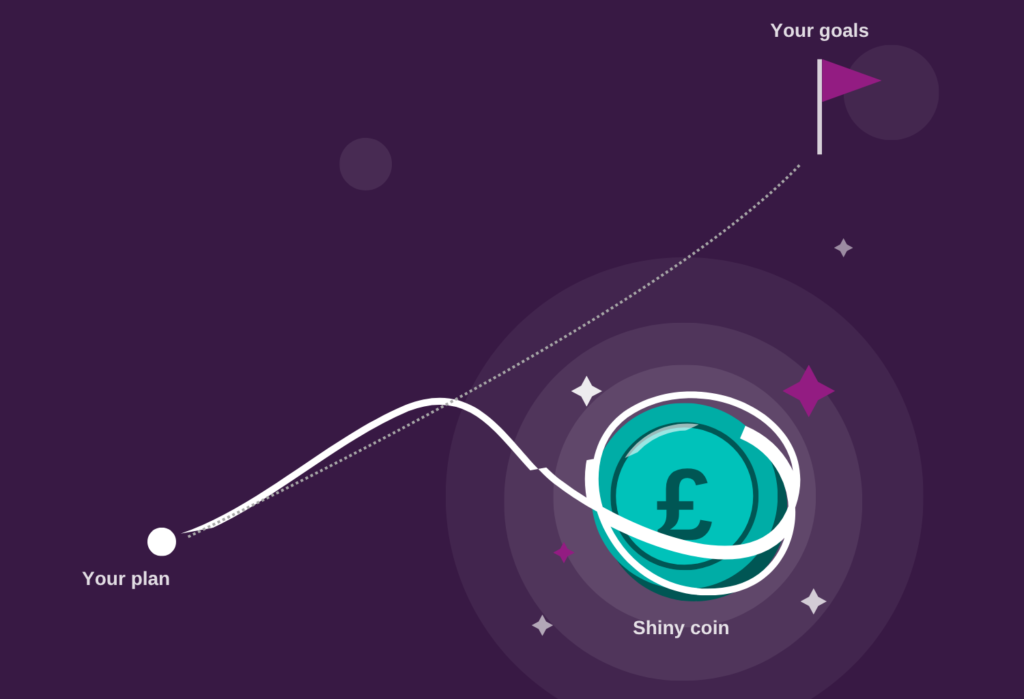
How a shiny coin can affect your marketing efforts
Four questions to ask first
Most shiny coins end up in the bin because they haven’t been thought through before actioning. Can some shiny coins end up being a great decision? Yes. But most don’t. I suggest you ask yourself some basic questions before you fall down the rabbit hole:
- How does this relate to our business goals? If you’ve set a goal for the year, whether that’s a number of new clients or a revenue target, the idea needs to move you towards it. If it doesn’t, it’s a bad shiny coin.
- Will our audience want this, and have we asked them? An idea can feel brilliant inside the business and mean nothing to the people you sell to. Ask a few existing clients what they think first.
- What will this cost, and how will we pay for it? Count the money and the time. The budget has to come from somewhere, so something in your current plan will lose out. Is it worth it?
- How do we resource it? Who is doing the work, and what are they dropping to do it?
Don’t lose the shiny coin. Store it
The next time you think of the most brilliant idea in the world, or your team brings you one, don’t start on it. Write it down.
Keep a ‘shiny coins’ list. For one of my clients, we have a Monday board just for shiny coins. Yours could be a note on your phone or a notepad on your desk, as long as it’s somewhere you’ll look again.
When you add something, note who suggested it, the date, and what excited you about it.
If the idea came from your team, the list helps them too. Telling them you’ll think about it sounds like a no, and can be demotivating. Adding it to a list tells them you take their idea seriously and you want to spend time thinking about it.
Give half an hour
Come back to the list after a few days. Some ideas will already have lost their shine, and you can leave those where they are (or move them out).
If there’s one you can’t stop thinking about, set aside 30 mins (and set a timer) and work through the four questions above. If it’s still looking good, it may earn a place in the plan and you can decide what moves to make room for it. Or you can plan for it in the next quarter. If it’s not looking sexy anymore, you’ve spent 30 mins on it rather than losing weeks or months to it.
Stick to the plan you’ve already made
Writing ideas down keeps them safe and gives you the headspace to decide whether they’re worth your and your team’s time and budget.
More importantly, it keeps you on the plan you’ve already made and committed to. That plan keeps building, and keeps moving you 1% closer to the growth goals of your business.
Bottom line is stop distracting yourself, and be ruthless with how you prioritise. That’s the cure for shiny object syndrome.
I’ll also acknowledge how tough it can be to make these calls from within your own business and team. You’re just too close to it, and you care deeply about succeeding, so it’s easy to fall into the trap. I consult with my clients to ensure that doesn’t happen, steering them in the right direction. Take a look at my Marketing Consultancy service.